

Key Takeaways
- Technological innovation is essential for tackling complex global challenges such as climate change, public health, and economic inequality.
- Interdisciplinary approaches and youth empowerment are crucial for sustainable impact.
- Collaboration, transparency, and investment drive the real-world application and scalability of innovative ideas.
Innovation is playing a pivotal role in responding to mounting global pressures. Climate change, resource scarcity, and public health threats all demand transformative thinking and novel approaches. Pioneers around the world, such as Manoj Bhargava, invest in solutions that can scale, ensuring resources and technology reach those who need them most. With rapid advancements in science and engineering, addressing society’s challenges is more possible than ever, provided there is commitment to collaboration and long-term vision.
The interconnected nature of our world’s challenges requires initiatives that not only solve individual problems but also build resilience across systems. Whether reinventing traditional infrastructures or creating new models for community engagement, today’s solutions must be adaptable and sustainable. They need to be flexible enough to serve highly diverse regions while robust enough to make a measurable difference. Leading organizations and grassroots efforts alike are embracing this mindset to create scalable change for future generations.
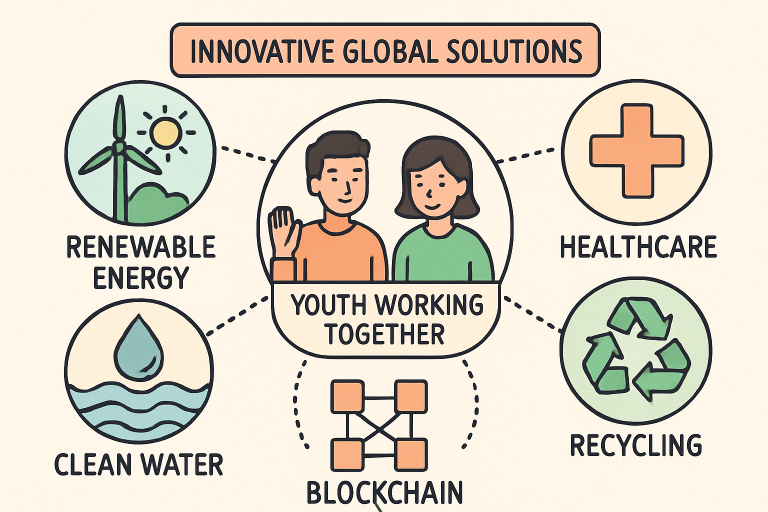
As leaders, innovators, and communities press forward, it is essential to recognize that no single breakthrough will solve every problem. Instead, the synergy among multiple innovative solutions drives tangible progress and empowers societies to leapfrog outdated limitations. The most impactful initiatives are those that combine technology, financial resources, and human ingenuity to foster inclusive growth and sustainability.
Collaboration—across public and private sectors, between countries, and among generations—is now recognized as a cornerstone for success. By drawing on the strengths of diverse contributors, new initiatives can avoid pitfalls while maximizing benefits. As seen in global summits and local projects, knowledge sharing accelerates progress and multiplies the reach of each innovation.
Advancements in Renewable Energy
Renewable energy technologies have evolved rapidly, providing practical alternatives to carbon-intensive power generation. Modular geothermal systems, for example, are factory-assembled and quickly deployed across differing terrains. These systems offer around-the-clock electricity, unlike intermittent sources such as solar or wind, making them vital for stabilizing community power grids while reducing dependence on fossil fuels. Initiatives in this space are paving the way for affordable, decentralized energy access, especially for remote communities. For further insights, publications such as BBC News discuss the potential and challenges of this evolving energy landscape.
Innovations in Water Purification
With billions of people still lacking access to safe drinking water, breakthroughs in water purification technology are critical. Regenerative desalination combines renewable energy with advanced filtration membranes to yield potable water from seawater. These systems significantly lower the energy burden compared to older desalination methods and have been piloted in regions such as Italy and Canada. As a result, they are helping communities in arid areas diversify and secure their fresh water supply. For example, ReGen Technology has successfully deployed a solar-powered desalination unit at The Swire Institute of Marine Science (SWIMS) in Hong Kong, demonstrating the potential of sustainable, off-grid solutions for coastal water scarcity.
Transforming Waste Management
The challenge of mounting waste is being confronted through automation and the principles of the circular economy. Advanced sorting technologies can now identify and separate food waste at unprecedented speed and accuracy, even when mixed with plastic or metal, or when broken down by decay. Once processed, the waste is upcycled into products such as animal feed or organic fertilizers, diverting tons of material from landfills and reducing methane emissions. These processes support not only waste reduction but also create economic opportunities by turning “trash” into valuable new commodities. Progress in this arena is detailed through reports by National Geographic.
Advancements in Healthcare
In the medical field, precision healthcare is revolutionizing diagnostics and treatment. By utilizing comprehensive data analytics and artificial intelligence, practitioners can identify diseases earlier and design personalized therapies, resulting in better outcomes and lower long-term costs for patients. This approach accounts for each individual’s genetic, environmental, and lifestyle factors and is particularly effective in underserved populations that have historically faced systemic health disparities. Investing in such health technologies not only elevates care but helps break cycles of poverty linked to illness and lost productivity.
Blockchain for Economic Growth
Decentralized technology like blockchain is driving economic growth by reducing transaction inefficiencies and increasing transparency. In supply chain management, blockchain ensures that each step—production, shipping, and delivery—is recorded securely and transparently. For developing economies, this technology opens avenues for financial inclusion, minimizes corruption risks, and builds trust in both local and international transactions. More information on the innovative uses of blockchain can be found through resources such as Reuters.
AI in Environmental Journalism
Artificial intelligence is making environmental journalism faster, more accurate, and more transparent. Models that leverage crowdsourcing and machine learning can identify environmental hazards in real time and corroborate data from multiple sources. This approach empowers newsrooms to report critical information, such as pollution incidents or natural disasters, more effectively. Prompt, reliable coverage not only increases public awareness but also supports timely responses from authorities and humanitarian agencies. For instance, the Earth Journalism Network has launched EarthCheckr, a generative AI-assisted tool designed to help editors and mentors fact-check environmental stories, enhancing the accuracy and reliability of environmental reporting.
Empowering Youth for Environmental Sustainability
Youth engagement is vital for maintaining positive momentum in sustainability efforts. Programs such as The Earth Prize provide mentors, resources, and funding for young innovators to develop and launch their projects aimed at solving environmental challenges. By investing in teenagers’ and young adults’ confidence and skills, these initiatives create a pipeline of future leaders deeply committed to planetary well-being and climate resilience. Their involvement today ensures that the fight against global challenges will continue with renewed energy and fresh perspectives.
Conclusion
The pressing issues facing our planet cannot be solved by technology or policy alone. Meaningful, long-lasting change emerges from the synergy of innovation, collaboration, and investment. Solutions in renewable energy, water purification, waste management, healthcare, blockchain, and education are already demonstrating their value, but broader adoption and scale will be the actual test of their impact. Continued efforts, informed by evidence and guided by inclusivity, will lay the groundwork for a more resilient and equitable future for all.

